Bitcoin's Critical Support: Navigating the Volatility Landscape

Bitcoin is currently testing a crucial support level around $67,000, which could lead to significant volatility. Analysts indicate that if this level is breached, it may result in substantial losses or potentially signal a bullish reversal. This situation is further complicated by differing opinions in the market, such as Jeremy Grantham’s forecast of Bitcoin’s declining relevance, and ongoing regulatory discussions that contribute to the uncertainty surrounding its future. For those monitoring BTCUSD, key attention should be on buyers’ ability to maintain this support, as a failure could open the door to lower levels near $58,000. The price range between $60,000 and $70,000 is critical; a decisive daily close above $70,000 would indicate strong institutional buying interest and a possible shift in trend. Traders should keep these levels in mind as they navigate the current market landscape. ...

June 28, 2026 · ActiveTradingClub

Bitcoin's Critical Support: A Volatility Opportunity Awaits

Bitcoin is currently hovering around $60,000, a critical support zone that traders are closely monitoring. After reaching a peak of $126,000, the cryptocurrency has retraced over 50% and is now testing this pivotal area between $58,500 and $60,000. Analysts suggest that this level will be crucial for determining Bitcoin’s next significant move. Influential figures like Jeremy Grantham are predicting a possible downturn, prompting many traders to adopt hedging strategies as BTCUSD faces considerable downward pressure and evolving market sentiment. Technical analysis highlights the $62,800 Fibonacci 1.272 extension as a significant resistance point; failure to maintain support could lead to a drop towards the $55,000 level. While some traders are looking for signs of a bullish accumulation phase, the prevailing bearish sentiment will likely persist unless the price can reclaim the $70,000 resistance with strong volume. Traders should keep an eye on daily closes above $62,800 for signs of a recovery, while a move below $58,500 could confirm further drawdowns. ...

June 27, 2026 · ActiveTradingClub

Bitcoin's Volatility: A Deep Dive into Market Manipulation Claims

Bitcoin’s recent drop to $58,000 has sparked discussions about potential market manipulation affecting its volatility. Traders are increasingly concerned that artificial supply shocks or coordinated “stop-hunting” during periods of low liquidity may be intensifying the decline, leading to an uptick in hedging through Bitcoin options. This situation poses a challenge to Bitcoin’s narrative of decentralization and highlights underlying systemic weaknesses that favor aggressive, high-frequency trading strategies. While some reports suggest large-scale manipulation, the evidence leans more toward structural flaws and macroeconomic pressures rather than the actions of a single entity. Currently, the BTCUSD ticker reflects a complex interplay of market panic and institutional skepticism. Going forward, it will be important to monitor whether BTCUSD can stabilize above critical support levels. A failure to do so, combined with ongoing claims of manipulation, could lead to a more significant correction in the weeks ahead. ...

June 26, 2026 · ActiveTradingClub

Navigating the Impact of MiCA on Crypto Firms in the EU

As the July 1, 2026 deadline for the Markets in Crypto-Assets (MiCA) regulation approaches, the European Union’s crypto landscape is set for significant changes. The European Securities and Markets Authority (ESMA) is taking steps to push unlicensed firms out of the market, which could leave up to 75% of current Virtual Asset Service Providers at risk of failing to meet new licensing requirements. This shift may lead to increased volatility in BTC-USD as liquidity moves toward compliant exchanges, likely reducing speculative trading volumes while bolstering institutional confidence. Regulatory changes can be disruptive initially, but they often pave the way for a more stable market in the long run. Traders should monitor potential mergers and acquisitions among compliant exchanges, as these developments could reshape the market dynamics and stabilize prices. Keep an eye on forthcoming announcements, as they may indicate the next phase of market evolution. For more details on MiCA’s enforcement timeline, refer to ESMA’s official guidance: ESMA Guidance. ...

June 24, 2026 · ActiveTradingClub

Navigating Bitcoin's Volatility Amid Regulatory Changes

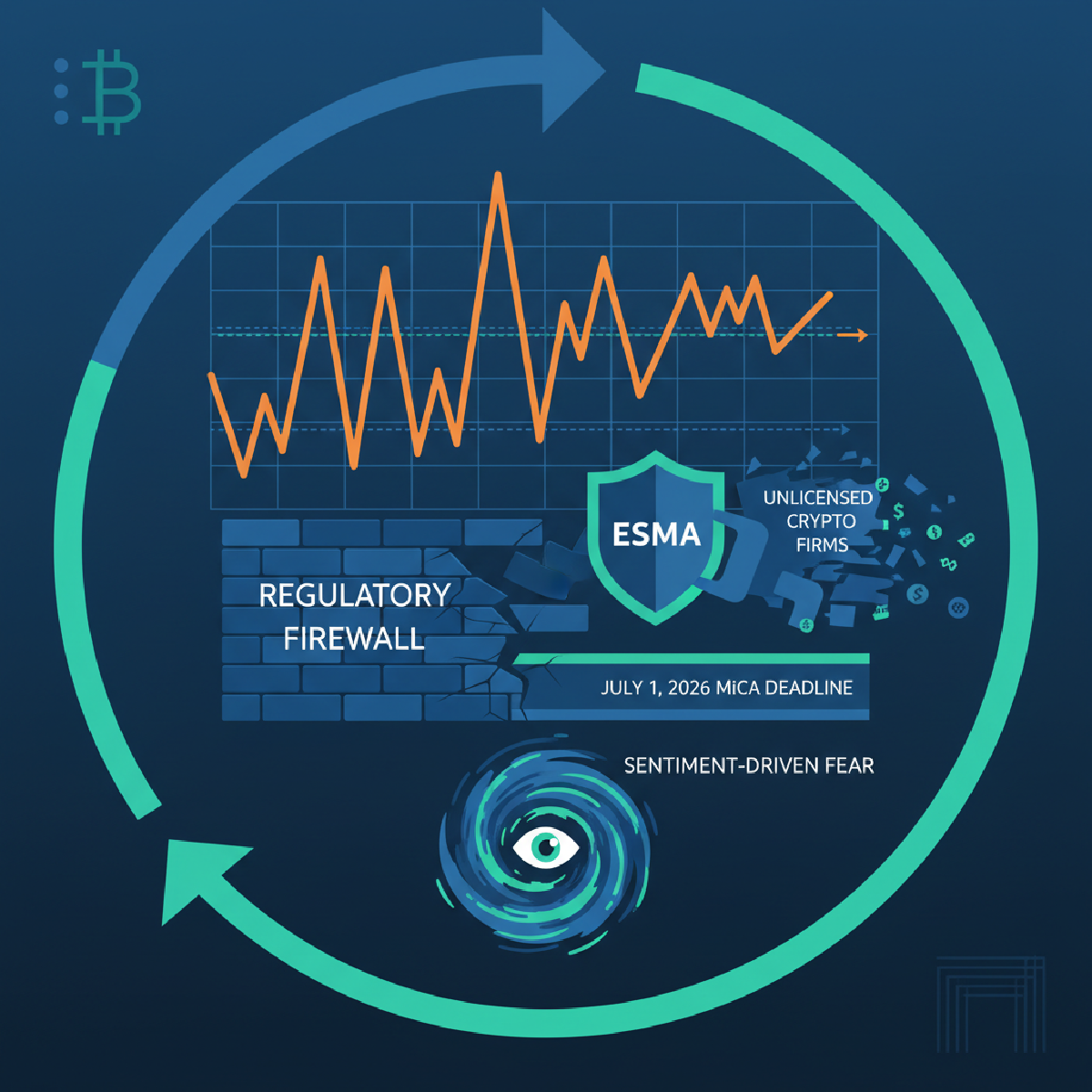
Bitcoin is currently trading around $62,000, influenced by regulatory pressures and ongoing price fluctuations. The European Securities and Markets Authority (ESMA) has set a deadline of July 1, 2026, for unlicensed crypto firms to exit the market under the new Markets in Crypto-Assets Regulation (MiCA). This regulation is tightening liquidity and creating uncertainty, prompting both institutional and retail traders to reassess their risk exposure. Historically, regulatory changes have led to a temporary decline in speculative trading, and while MiCA aims to provide long-term stability, the immediate outlook remains challenging as traders evaluate compliance costs against potential benefits. ESMA’s warnings regarding the risks of non-EU firms are adding to the psychological pressure on Bitcoin. A key date to watch is post-July 1, when we will see whether a liquidity gap emerges or if licensed institutions can fill it. Traders should monitor regulatory updates from ESMA closely, as these will significantly impact Bitcoin’s volatility in the coming weeks. For more insights, check ESMA’s comprehensive warning on crypto-assets. ...

June 24, 2026 · ActiveTradingClub

Navigating the Impact of EU Crypto Regulations on Market Dynamics

The European Union’s new regulations targeting unlicensed crypto firms are set to reshape the market as the grace period under the [Markets in Crypto-Assets (MiCA)](https://www.esma.europa.eu/press-news/esma-news/esma-provides-update-transition-crypto-assets-regime-under-mica) framework concludes. By July 1, 2026, the European Securities and Markets Authority (ESMA) requires non-compliant entities to halt operations, which could affect around 75% of crypto firms operating in Europe. This regulatory change is likely to impact liquidity and investor confidence, particularly because European retail demand is significant in the global crypto market. Past experiences show that similar regulatory shifts have led to abrupt platform closures and erratic price fluctuations. Therefore, we might expect increased volatility in BTCUSD, with potential sell-offs in EU trading volumes that could temporarily affect global prices. It’s essential to keep an eye on how quickly clients transition to compliant exchanges and whether major EU platforms impose restrictions on new deposits, as these factors will likely influence market sentiment going forward. For more insights, see ESMA’s official warning on crypto assets here and their analysis of the deadline here. ...

June 24, 2026 · ActiveTradingClub
Privacy settings