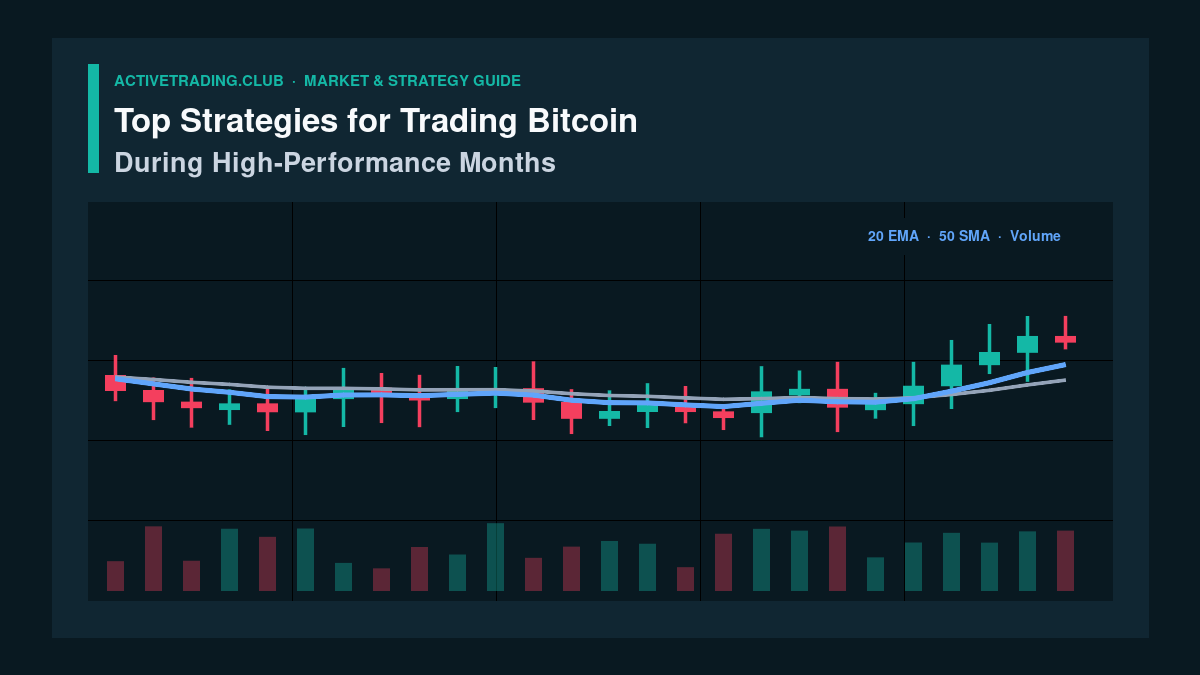
Top Strategies for Trading Bitcoin During High-Performance Months
Bitcoin exhibits notable seasonal tendencies, with certain months historically outperforming others. However, these patterns are not as straightforward as many traders may think. Effectively trading during these so-called “high-performance months” requires combining seasonality with other factors such as market structure, volatility, liquidity, and risk management. Research indicates that months like October, November, February, July, and parts of Q4 tend to yield better returns, whereas September often sees weaker performance.
To trade Bitcoin wisely during these stronger months, consider seasonality as a filter rather than a standalone signal. This distinction helps traders avoid overcommitting to a calendar pattern in a market that can still experience significant downturns, even in historically strong months.
Understanding the Importance of High-Performance Months
Unlike traditional stocks, Bitcoin is not influenced by earnings reports or dividend cycles. Its monthly performance is shaped by factors such as leverage resets, ETF inflows, halving cycles, speculative interest, and overall market risk appetite. Consequently, momentum can cluster in specific periods, particularly when Bitcoin is already trending.
Historical data shows that specific months like October, November, February, and occasionally July display consistent strength, while September is often marked by weakness. However, these are averages, and a month with a strong historical record can still experience sharp declines. The sample sizes are limited in a market as volatile and young as Bitcoin.
The key takeaway is clear: if Bitcoin is entering a historically strong month and the technical setup looks positive, traders can capitalize on momentum while employing tighter risk management practices and more selective trade choices.
Strategy 1: Trade the Trend, Not Just the Month

The first rule of trading Bitcoin during high-performance months is to ensure seasonality aligns with an existing trend rather than attempting to create one.
How to Implement This Strategy
- Start by analyzing higher time frames, such as weekly and daily charts.
- Look for higher highs and higher lows, or a robust base near prior breakout levels.
- Use the historical strength of the month as a timing tool, rather than the sole reason to enter a trade.
- If Bitcoin is below key moving averages and making lower lows, avoid relying on seasonal patterns.
Example
For instance, if Bitcoin starts October after consolidating above a rising 50-day moving average, with improved volume and neutral funding, then the historical strength of October can act as a supportive factor. A continuation trade in this scenario would likely have a more favorable risk-reward profile than a blind calendar-based buy.
Rationale
Seasonal strength is generally more impactful when it coincides with an existing trend. A strong month can amplify an upward trend, while a weak market can diminish the influence of seasonality.
Strategy 2: Utilize Breakout Entries in Strong Months
High-performance months provide excellent opportunities for breakout trading, as Bitcoin often makes significant moves once it escapes consolidation. In a volatile market, waiting for confirmation can be more beneficial than attempting to catch the absolute bottom.
Step-by-Step Breakout Approach
- Identify a tight consolidation area on the daily chart.
- Mark the top of the range and any nearby resistance levels.
- Watch for a volume spike during the breakout.
- Enter the trade on a confirmed close above resistance, or on a retest if it occurs promptly.
- Set a stop loss below the breakout level or under the retest low.
- Take partial profits at the first major extension area.
Practical Example
Consider a scenario where Bitcoin trades sideways for 18 days in late September, then breaks above range resistance in early October with increased volume. A trader buying the breakout and placing a stop just under the range can aim for the next weekly resistance level. If October follows its historical trends, the move might extend further than anticipated.
Important Note
Be cautious not to chase every upward movement. Bitcoin can execute false breakouts, especially when leverage is heavily applied. Always wait for volume and structural confirmation.
Strategy 3: Buy Pullbacks in Uptrends During Bullish Months
In a strong upward trend, the best entry points often come from pullbacks to support levels rather than chasing breakouts. High-performance months tend to reward patience, as strong markets frequently revisit support before continuing their upward trajectory.
Key Areas to Look for Pullbacks
- Prior breakout zones
- 20-day or 50-day moving averages
- Previous weekly resistance that has turned into support
- Fibonacci retracement levels on a confirmed trend
Step-by-Step Pullback Strategy
- Confirm an uptrend on the daily chart.
- Identify a recent strong upward movement.
- Wait for a pullback of approximately 20% to 50% of that movement.
- Look for a reversal candle, support hold, or volume contraction near support.
- Enter the trade with a stop loss below the swing low.
- Scale out as the price retests previous highs.
Example
If Bitcoin rises from $58,000 to $68,000 in October and then pulls back to $63,500, which aligns with previous resistance and the rising 20-day average, this creates a favorable entry point. If the pullback stabilizes and buyers step in, it presents a better risk-reward setup than prematurely buying into the initial breakout.
Rationale
Buying during pullbacks reduces entry risk and enhances potential rewards. In strong months, traders are often rewarded for their patience.
Strategy 4: Implement a Volatility Expansion Plan
Bitcoin tends to exhibit more significant movements during periods of rising volatility. In high-performance months, the market often transitions from low volatility to high volatility. Traders prepared for this shift will have an advantage.
What to Monitor
- Bollinger Band squeezes
- Narrow daily trading ranges
- Declining realized volatility
- Sideways price action following a strong move
- Increasing volume leading up to a macro catalyst
Trading Approach
- Create a watchlist of setups that are compressing near key levels.
- Set alerts instead of constantly monitoring charts.
- Enter trades only after volatility confirms the direction.
- Manage risk carefully when volatility begins to rise quickly, as stops can be triggered easily.
Example
If Bitcoin spends most of November in a tight range following a strong October, a breakout above that range can result in rapid price movement, particularly if leverage is skewed one way and short sellers are forced out. If this breakout occurs during a historically strong month, the move can be especially significant.
Cautionary Note
Remember that volatility expansion can work both ways. A strong month does not guarantee smooth price movements; it often introduces both opportunities and risks.
Strategy 5: Scale In Instead of Going All In
One common mistake traders make during seasonal Bitcoin trades is committing their full position size too early. A better approach is to scale in over several confirmed signals.
Scaling Model
- 25% position on initial confirmation
- 25% on a successful retest
- 25% on trend continuation
- 25% on a higher-low setup
Advantages
- This method reduces the risk of mis-timing the market.
- It keeps traders engaged without requiring overly large bets.
- It allows for adding to positions only when the trade proves itself.
Example
During a strong February, if Bitcoin breaks a weekly base, retests the breakout, and begins making higher lows on the 4-hour chart, a trader can start a position on the first signal and add during the retest and continuation phases rather than committing the entire position on the initial breakout.
Strategy 6: Integrate On-Chain and Flow Data with Seasonality
Seasonality alone provides an incomplete picture. To gain a competitive edge, Bitcoin traders should monitor additional data points influencing the market.
Key Data Points
- Spot ETF inflows and outflows
- Funding rates
- Open interest
- Exchange balances
- Long/short positioning
- Realized volatility
- Miner selling pressure
- Macro events like CPI reports or Federal Reserve meetings
Application
- A bullish season combined with spot inflows and rising prices strengthens the trading thesis.
- A bullish season with overheated funding and crowded long positions warrants caution.
- A weak season with falling open interest and broken support suggests avoiding long positions.
- A bullish month with flat flows and tight ranges indicates a potential breakout, but patience is crucial.
Example
If Bitcoin enters November with strong ETF inflows and a positive price structure, the seasonal context becomes a significant advantage. Conversely, if the month opens amid excessive leverage and rising funding, it may be wiser to wait for a pullback before entering a trade.
Strategy 7: Take Profits More Quickly

High-performance months can lead to rapid gains, but Bitcoin can also reverse sharply after a strong run. Traders who hold on for the “moon shot” often end up giving back too much profit.
Practical Profit-Taking Guidelines
- Take partial profits into the first major resistance zone.
- Move stops to break-even after a confirmed impulse.
- Trail stops under higher lows once the trend is established.
- Avoid allowing a profitable trade to turn into a hope trade.
Example
If a Bitcoin position rises 12% in October over four sessions, a trader might take partial profits near the first weekly resistance and then trail the remaining position. This way, even if the next candle sells off, the trade remains profitable.
Personal Insight
Many traders struggle with profit-taking. They focus too much on entry points and neglect to exit intelligently.
Strategy 8: Use September Weakness as a Setup Month
While some months are typically stronger, others can serve as preparation periods. September is often recognized as a weak month for Bitcoin, but this does not mean traders should automatically short every movement. Instead, it’s about being more selective and using the weakness to prepare for future strength.
How to Navigate Weak-to-Strong Transitions
- Create a watchlist of support zones.
- Reduce position sizes or remain neutral during choppy conditions.
- Look for signs of capitulation, washouts, and failed breakdowns.
- Utilize late-month weakness to position for a potential rally in Q4, provided the chart supports it.
Example
If Bitcoin experiences a sell-off in September, flushes liquidity below a prior swing low, and then reclaims that level, this failed breakdown might set up for a strong continuation in October if buyers defend the reclaim.
Importance
The most successful seasonal trades often begin with discomfort. A weak month can create the foundation for a stronger one to follow.
Strategy 9: Adapt Your Approach to Market Conditions
Not all strong months behave similarly. Bitcoin’s performance can vary significantly depending on whether it’s in a bull cycle, bear cycle, or post-halving phase. Seasonality research suggests adjusting strategies based on these market conditions.
Suggested Regime Filters
- Bull Trend: Favor breakouts and pullbacks.
- Bear Trend: Favor short rallies and manage risk tightly.
- Transition Phase: Trade smaller and wait for confirmation.
- Post-Halving Phase: Expect stronger trending days but also potential shakeouts.
Example
October during a bull market can be a month of momentum, while October in a bear market may only produce sharp squeezes followed by further declines. The month may remain the same, but the market conditions differ.
A Practical Playbook for High-Performance Months
Here is a straightforward workflow traders can utilize:
1. Before the Month Begins
- Review historical seasonality relevant to the upcoming month.
- Identify key weekly support and resistance levels.
- Check the trends on both daily and weekly charts.
- Analyze funding rates, open interest, and ETF flows.
2. During the First Week
- Avoid forcing trades immediately.
- Observe whether prices respect key levels.
- Look for compression, reclaims, or breakout behaviors.
- Assess whether the market is trending or consolidating.
3. Once a Setup Forms
- Use breakout or pullback entries.
- Keep stops clear and predefined.
- Avoid excessive leverage.
- Implement partial profit-taking strategies.
4. After the Move Initiates
- Trail stops below key structures.
- Add to positions only on confirmations.
- Reduce position sizes if momentum stalls or leverage becomes crowded.
- Never assume the monthly trend will sustain indefinitely.
Common Mistakes Traders Should Avoid
1. Blindly Buying Every Bullish Month
Historical strength does not equate to guaranteed success. If the chart shows weakness, it’s best to stay out.
2. Overlooking Leverage and Funding Dynamics
A strong month can still lead to liquidation cascades if market positioning becomes too crowded.
3. Using Excessive Position Sizes
Bitcoin can deliver meaningful returns without high leverage. Overexposure can turn a solid thesis into a random outcome.
4. Holding Winning Trades Without a Plan
When a trade moves favorably, pre-determine where profits will be taken.
5. Confusing Average Returns with Certainty
Seasonality studies illustrate tendencies, but they are not guarantees.
Real-World Trade Scenarios
Scenario 1: October Breakout Trade
If Bitcoin has spent most of September building a base and closes above resistance on October 3 with volume, a trader can buy the close, set a stop below the base, and target the next weekly resistance. This exemplifies a clean seasonal momentum trade.
Scenario 2: November Pullback Continuation
If Bitcoin trends higher in October and early November, then pulls back to its 20-day average, a trader can buy the pullback after observing a strong reversal candle, scale out during the next upward push, and trail the remaining position. This approach is often safer than chasing the first rapid move.
Scenario 3: Weak September, Strong Reclaim
If Bitcoin breaks support in early September, flushes lower, and then reclaims that level after a short squeeze, a trader who waits for the reclaim can secure a lower-risk entry for a potential Q4 rally, rather than attempting to catch a falling asset.
Final Thoughts
To effectively trade Bitcoin during high-performance months, it’s essential to respect seasonal patterns without becoming overly reliant on them. Historical data indicates that certain months, particularly October, November, February, and sometimes July, have tended to be stronger, while September often shows weakness. However, the true advantage lies in blending this seasonal insight with trend analysis, volatility awareness, and disciplined trading practices.
If Bitcoin is trending, the month can serve as an additional catalyst. In contrast, if Bitcoin is range-bound, the month may only signal when to anticipate a more significant move. If Bitcoin is struggling, even historically strong months may not help.
Successful traders leverage Bitcoin seasonality not by trying to predict the future based on a calendar but by waiting for clear market structures, trading conservatively in uncertain conditions, and committing to trades only when the market aligns with historical expectations.
Additional Resources for Further Reading
- Bitcoin seasonality chart and monthly returns data
- Month-by-month historical return breakdowns
- Seasonality analysis with month rankings
- Broader Bitcoin returns and seasonality commentary
This article may contain affiliate links.