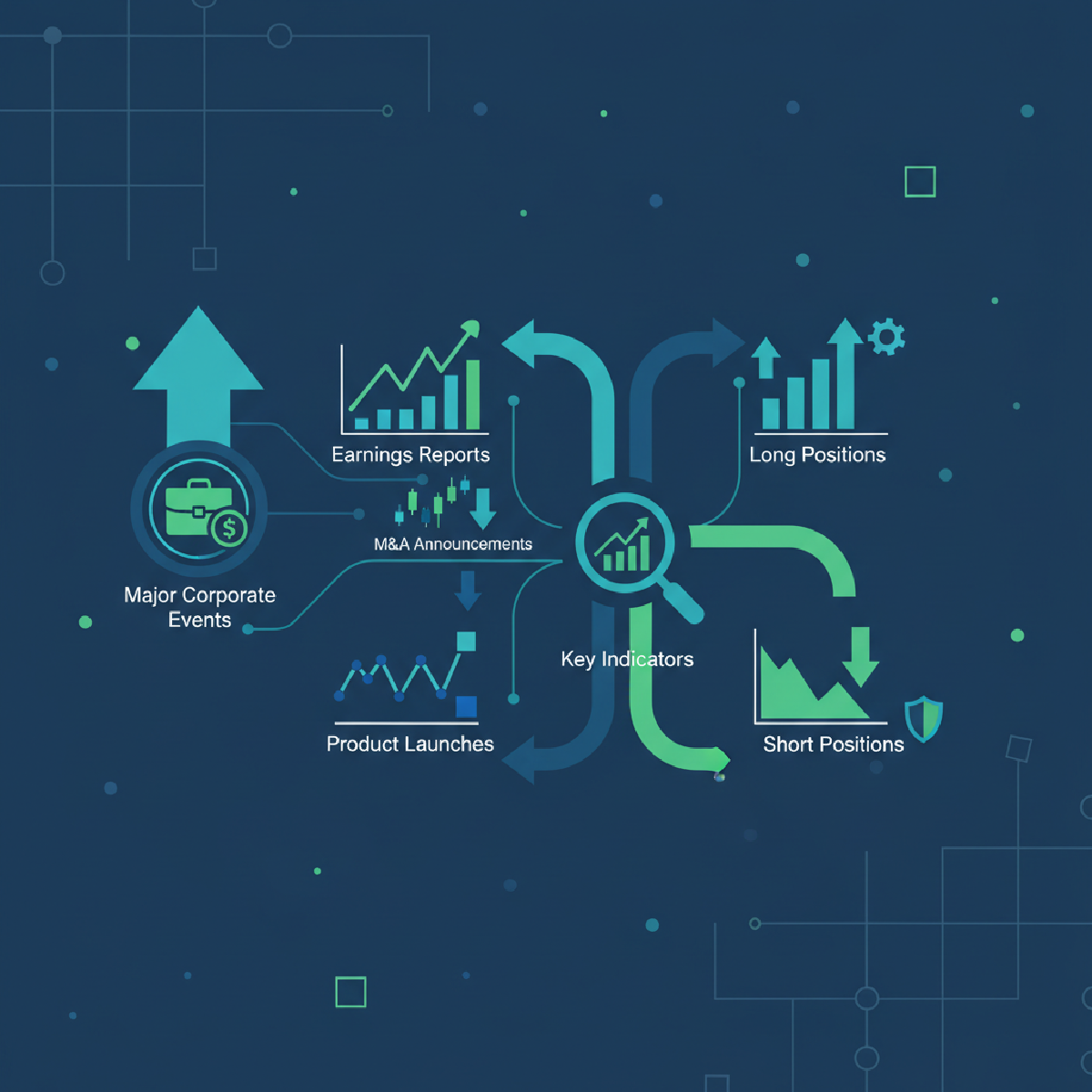
Key Indicators: How to Trade Around Major Corporate Events
Major corporate events can significantly influence stock prices, as seen in instances like Apple’s earnings report on July 31, 2022, which resulted in a 10% drop. These events present both opportunities and risks for traders. It’s essential not just to predict the outcomes but to understand the indicators that matter beforehand, how prices respond afterward, and how to manage risks when volatility increases.
In this guide, I’ll outline strategies for navigating through earnings calls, guidance updates, mergers, management changes, product launches, and other corporate catalysts. Pay special attention to the key indicators: expectations, price action, volume, liquidity, implied volatility, support and resistance, and market context.
How Corporate Events Impact Stock Prices
Corporate events prompt quick reassessments of valuations. A company might exceed earnings expectations yet still see a stock decline if investors had expected even better results. Conversely, a mediocre performance can lead to a rally if the market had already priced in concerns.
Understanding the surprise versus consensus and how the market interprets that surprise is crucial. Many traders may rush into trades based on initial reactions, while those who wait for confirmation often find better entry points. I learned this from my experience during a Fed rate decision in 2022, where I quickly entered a long position only to face a rapid reversal.
Key Indicators to Watch

Expectations vs. Actual Results
The difference between anticipated results and actual performance is the most important indicator. For earnings reports, consider the following:
- Revenue
- Earnings Per Share (EPS)
- Margin trends
- Guidance
- Analyst expectations
Strong EPS can still lead to a sell-off if the guidance is weak. Conversely, a small miss might be overlooked if the guidance is robust and the market had been conservatively positioned.
Price Action Before the Event
Before announcements, stock movements can indicate trader positioning. Look for:
- Tight consolidation ahead of earnings
- Strong trends leading into the event
- Heavy volume prior to the announcement
- Rejection at established resistance levels
- Unusual options activity
If a stock rallies significantly before earnings, high expectations could be priced in, increasing the risk of a “buy the rumor, sell the news” scenario.
Volume
Volume is essential for confirming whether the market accepts new information. A breakout on low volume is generally less reliable than one supported by strong participation from institutional investors. Key volume signals to monitor include:
- Expansion during initial reactions
- Elevated volume following the first candle
- Volume tapering off on losing sides of moves
Support and Resistance
Support and resistance levels are vital as stocks often respond to these points before reacting to news. Identify prior highs and lows, gap levels, moving averages, and psychological thresholds prior to the event. A sustained break of a significant level indicates market acceptance of the new valuation.
Implied Volatility and Options Pricing
For stocks with active options, implied volatility reflects market expectations for price movement. High implied volatility before earnings indicates that traders anticipate a significant price shift. Important factors to consider include:
- Elevated options premiums leading up to the event
- The necessity for a considerable move to justify purchasing short-dated options
- Potential for a volatility crush following the event
Understanding implied volatility is essential for maintaining an edge when trading options.
Liquidity and Spread
Thinly traded stocks can pose risks around corporate events. Wider spreads and slippage can undermine a well-planned strategy. Favor stocks with:
- High average daily volume
- Tight bid-ask spreads
- Deep options liquidity
Most Tradable Corporate Events
Not all corporate events warrant trading. The most impactful typically include:
- Earnings releases
- Guidance updates
- M&A announcements
- Management changes
- Regulatory decisions
- Product launches
Earnings remain a consistent catalyst due to their scheduled nature and comparability across quarters.
A Framework for Trading Around Events
To effectively trade around events, follow a structured process.
Step 1: Build Your Watchlist
Start with a calendar of upcoming corporate events. Concentrate on companies you understand and those with sufficient liquidity. Gather consensus estimates, historical results, and key technical levels prior to the event.
Step 2: Decide Your Approach
Choose between pre-event positioning or post-event reaction trading. Personally, I prefer to wait for initial volatility to settle, which often leads to more reliable trade opportunities.
Step 3: Define Your Setup
Before the event, document your entry criteria, stop-loss levels, profit targets, and position size. Without a clear plan, you increase the risk of trading impulsively.
Step 4: Reduce Position Size
Risk should decrease around major events. I often reduce my position size by 50% or more to accommodate potential volatility, thereby minimizing the risk of larger-than-expected losses.
Step 5: Wait for Confirmation
Avoid jumping in immediately after the announcement. Allow a few minutes for the initial spike to settle and look for confirmation signals, such as retests of breakout levels or strong closes above resistance.
Trading Styles Around Corporate Events

Breakout Trading
This strategy involves trading in the direction of the initial move after processing the event. For instance, if a stock gaps up significantly on favorable news, traders may enter on a breakout above resistance.
Fade Trading
This approach entails trading against an overextended move. If a stock gaps up sharply but fails to maintain its opening range, a trader might consider shorting the stock.
Secondary Move Trading
Some of the best opportunities arise after the initial chaotic reaction. Waiting for the market to stabilize can lead to higher-probability setups.
Risk Management: The Key to Success
Effective risk management is vital around corporate events. A correct directional view is meaningless if your execution is poor.
Practical Rules
- Use smaller position sizes than usual
- Avoid large overnight exposure unless you have a defined edge
- Anticipate slippage and factor it into your stops
- Avoid averaging down blindly
- Be mindful of gap risks in either direction
Common Mistakes
Trading Headlines Instead of Reactions
Markets respond to expectations, not just headlines. A strong headline may still lead to a sell-off if the stock was already priced for perfection.
Entering Too Early
Many traders lose out by entering before the market reveals its direction. The initial move can often be a trap.
Ignoring the Broader Trend
Events do not occur in isolation. A stock’s performance can vary significantly based on the overall strength of its sector.
Overtrading Every Event
Not every earnings release is worth trading. Focus on high-quality setups, and when the setup is unclear, sometimes the best strategy is to refrain from trading.
Final Guidance
To trade successfully around major corporate events, prioritize reaction over prediction. Identify key levels, wait for confirmation, reduce position sizes, and trade only when price, volume, and market context align. The most effective traders follow a clean process rather than relying solely on personal opinions.
As you prepare for your next trade, monitor earnings releases and focus on market reactions, rather than just the headlines.
This article may contain affiliate links.