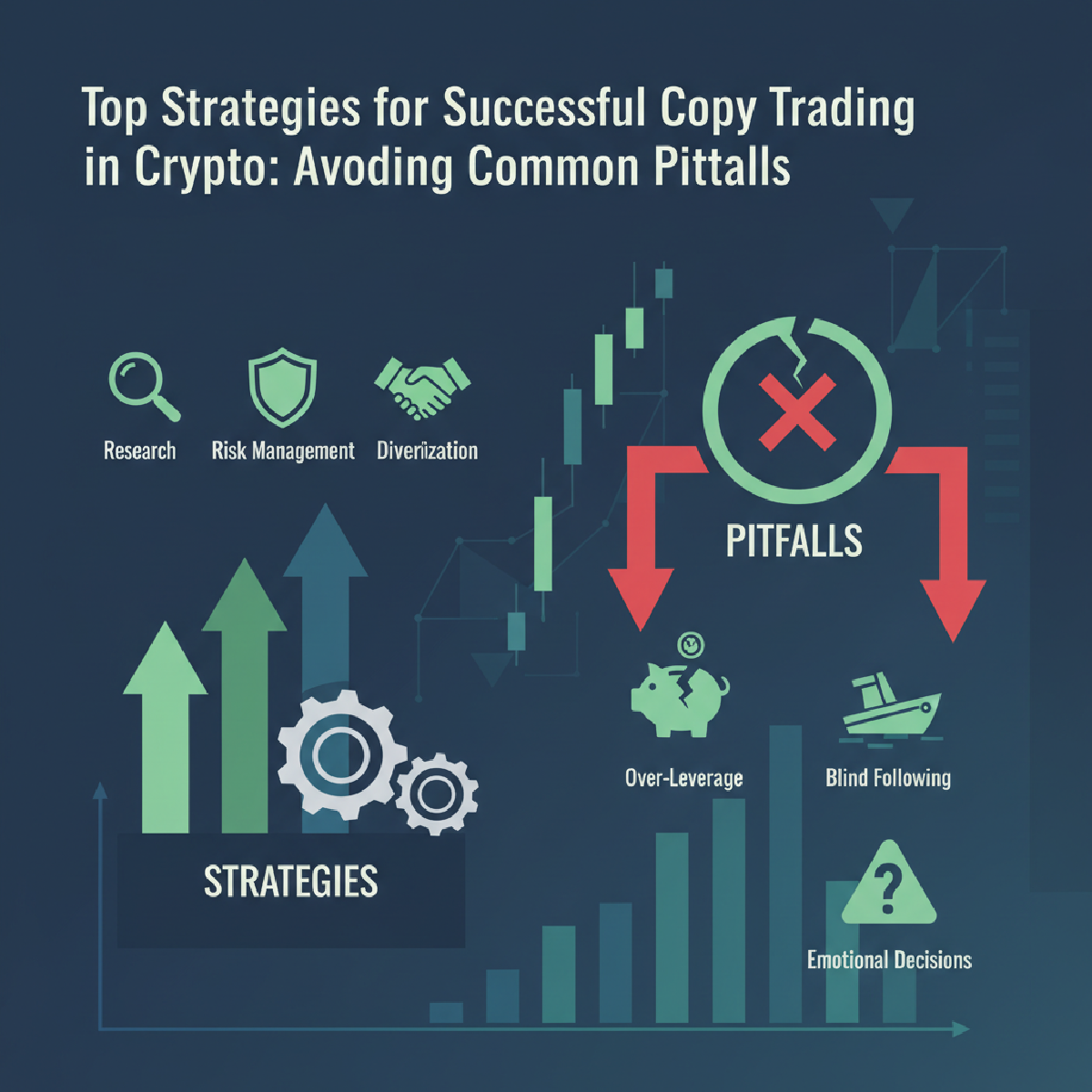
Top Strategies for Successful Copy Trading in Crypto: Avoiding Common Pitfalls
As of mid-2023, copy trading has become a popular entry point for many traders looking to engage with the cryptocurrency markets. However, it’s important to understand that following the trades of experienced professionals does not guarantee success. Effective copy trading requires strategy, discipline, and an awareness of common pitfalls that can lead to significant losses.
This guide will provide actionable strategies to improve your copy trading experience while helping you avoid the common mistakes that can impact your capital. Whether you’re new to crypto or looking to refine your approach, these insights can help you optimize your returns and manage risks effectively.
Understanding Copy Trading: Beyond the Basics
Copy trading allows you to mimic the trades of expert investors in real-time, making it an appealing option for those who may not have the time or expertise for traditional trading. You can select a trader whose results align with your financial goals, allocate your funds accordingly, and the platform will automatically execute their trades. However, this simplicity masks the complexities of the cryptocurrency markets. Your success depends not only on the traders you choose but also on how you manage your capital, diversify your investments, and recognize when to disengage from underperformers.
Strategy 1: Diversification Across Multiple Traders
A common mistake among traders is concentrating their entire capital on a single trader, referred to as the “single trader trap.” This approach can lead to substantial losses, especially during unexpected market shifts. Even successful traders can experience downturns; a trader who excels in a bull market might struggle in a bear market.
To mitigate this risk, distribute your capital across multiple traders with varying strategies and risk profiles. For instance, consider dividing your total copy trading capital into segments. If you have $5,000, you might allocate $1,000 to each of five different traders. This approach reduces risk by exposing you to different trading methods, whether they are scalping, swing trading, or position trading.
True diversification also requires selecting traders who engage in various asset classes, use different timeframes, and possess unique risk profiles.
Strategy 2: Rigorous Trader Selection Criteria
When selecting traders, many newcomers focus primarily on win rates or recent performance. However, a trader with a high win rate may be using a risky strategy that could lead to losses over time. Instead, evaluate traders based on several criteria:
- Performance Consistency: Look for traders who have demonstrated consistent results across different market cycles, not just during bullish trends.
- Risk-Adjusted Returns: Assess how much risk each trader takes to achieve their returns. A trader with a lower maximum drawdown tends to be more sustainable.
- Trading Frequency: Understand how frequently a trader executes trades. Higher frequency can lead to issues like slippage in volatile markets.
- Asset Focus: Ensure the trader specializes in assets that align with your investment goals.
It’s advisable to start with a modest capital allocation to test a trader’s performance before committing larger amounts.
Strategy 3: Smart Entry and Exit Timing
A frequent mistake copy traders make is entering trades at market peaks and exiting during dips, often driven by market emotions. Instead, implement a systematic entry strategy. Consider dollar-cost averaging your investments over several weeks instead of making a lump-sum allocation.
Developing clear exit criteria is equally important. If a trader’s performance declines below a predetermined threshold—such as a 15% loss over three months—consider halting the copy. Additionally, monitor for changes in trading strategy or significant drawdowns that exceed your risk tolerance.
Strategy 4: Robust Risk Management Tools
Utilizing built-in risk management features like stop-loss orders is essential. For each trader you copy, set a stop-loss level that matches your risk tolerance. For conservative traders, a stop-loss of 15-20% may be suitable, while more aggressive traders might accept larger losses.
Position sizing is another important consideration. Avoid allocating excessive capital to a single trader that could significantly impact your portfolio during their maximum drawdown. Ideally, limit individual trader allocations to no more than 5-10% of your total capital.
Strategy 5: Continuous Monitoring and Adjustment
Contrary to popular belief, copy trading is not a “set it and forget it” strategy. Regularly reviewing your portfolio is crucial. Establish a monthly review process to assess each trader’s performance, consistency, and drawdown metrics.
Be vigilant for indicators that adjustments are necessary, such as unexplained changes in strategy or ongoing underperformance. As performance diverges, consider rebalancing your allocations to better align with your investment objectives.
Common Pitfalls to Avoid
- Chasing Recent Performance: The temptation to follow traders with extraordinary recent returns can lead to disappointment. Remember, past performance does not guarantee future success.
- Ignoring Market Context: A trader excelling in one market condition may struggle in another. Analyze performance across various environments.
- Over-Leverage: Understanding leverage is critical. Avoid copying highly leveraged traders unless you fully comprehend the associated risks.
- Insufficient Diversification: Ensure you’re not merely copying traders with similar strategies. Seek genuine diversity in your portfolio.
- Emotional Decision-Making: Avoid panic during market volatility. Stick to your predetermined criteria and risk management rules.
- Neglecting Tax Implications: Frequent trades can trigger tax events. Keep detailed records and consult a tax professional.
Conclusion: Copy Trading as Part of Your Investment Strategy
Copy trading should not be viewed as a shortcut to wealth; rather, it is a valuable tool that can broaden access to professional trading strategies. When approached with discipline, proper diversification, strong risk management, and consistent monitoring, it can play a significant role in your cryptocurrency investment strategy.
Treat your copy trading portfolio like any other investment—with a clear plan, active management, and a focus on learning from each experience. Start small, test your approach, and as you gain confidence, gradually increase your efforts while remaining aware of market dynamics. By consistently applying the strategies outlined here, you can position yourself for long-term success in the evolving world of crypto.
This article may contain affiliate links. Always do your own research.