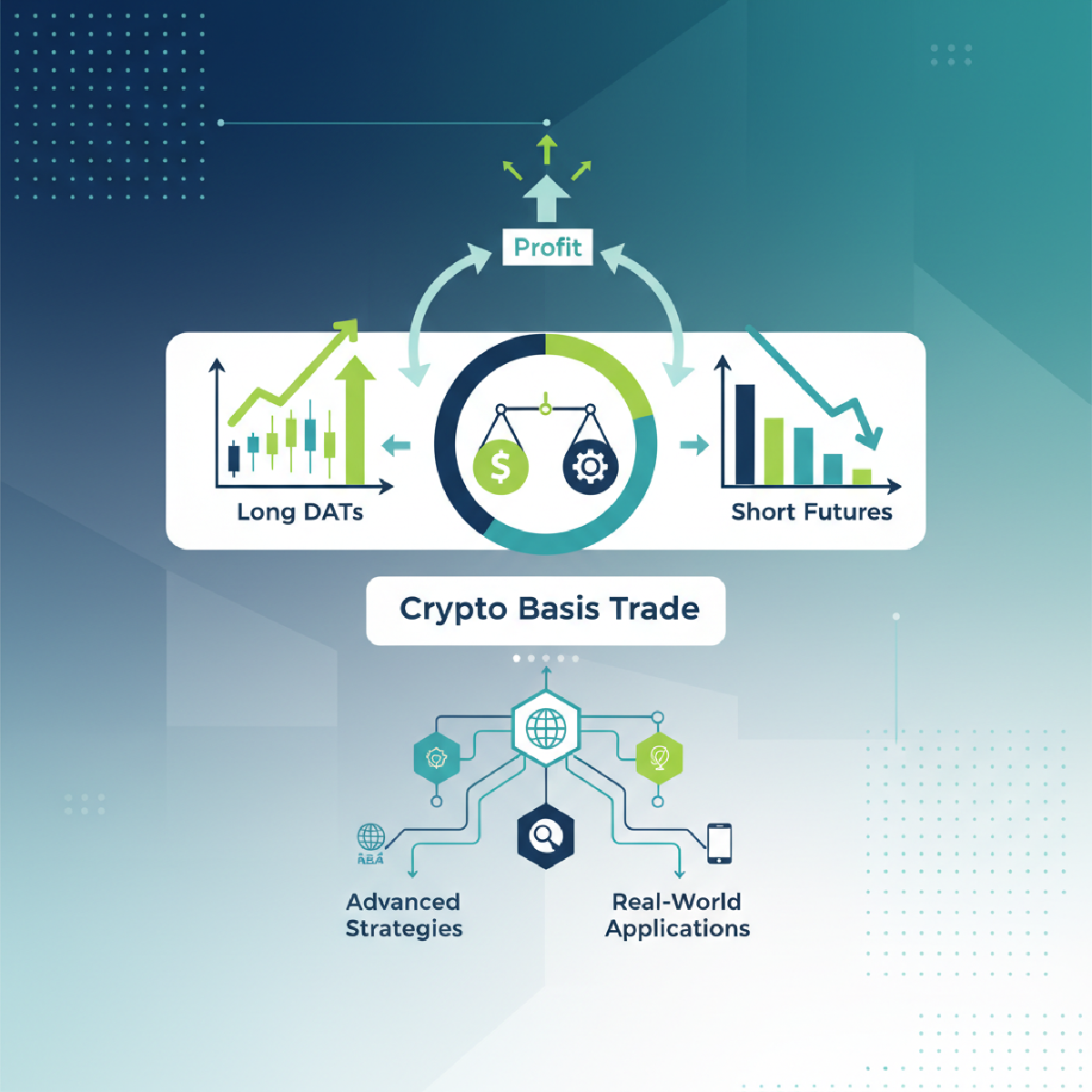
Mastering the Crypto Basis Trade: How to Profit by Going Long DATs and Short Futures – Part 3 of 3
In early 2023, Bitcoin futures often traded at a premium, highlighting a prime opportunity for basis trading. This final installment of our series expands on the foundational principles discussed in previous parts and explores advanced strategies and real-world applications to help you navigate these trading opportunities effectively.
Leveraged Basis Trades: Amplifying Returns Responsibly
Using leverage in basis trading can significantly increase both potential profits and risks. When going long on Decentralized Asset Tokens (DATs) while shorting futures, it’s crucial to understand how to manage leverage effectively.
Always adhere to your broker’s margin requirements to avoid overextending your position and facing liquidation during downturns. A disciplined approach involves adjusting leverage based on market volatility and maintaining a buffer margin to withstand sudden price swings. I have seen the consequences of aggressive trading during volatile periods, which can lead to significant losses.
Dynamic position sizing is essential. In unstable market conditions, consider reducing your leverage. For example, if funding rates rise sharply or regulatory news breaks, a more conservative approach can help safeguard your investment. Utilizing risk management tools like stop-loss orders and automated alerts can enhance your ability to monitor positions effectively.
Institutional Basis Trading: ETFs, CME Futures, and Regulatory Landscape
Institutional investors are increasingly employing basis trading strategies, frequently using exchange-traded funds (ETFs) to streamline the process. Recent filings by Defiance ETFs aim to provide retail investors with exposure to Bitcoin and Ethereum basis trades. These products can enhance liquidity and offer a level of regulatory oversight that may benefit retail traders. However, be aware that ETF returns are closely tied to market conditions, particularly contango—the situation where futures trade at a premium to spot prices.
The Chicago Mercantile Exchange (CME) offers regulated Bitcoin futures that appeal to institutional traders looking to arbitrage the premium in futures prices while minimizing risks associated with unregulated markets. Nonetheless, these trades typically require significant capital and compliance with stringent regulatory standards, which can be challenging for individual traders.
It is also vital to stay informed about compliance and market manipulation safeguards. Traders should navigate KYC and AML regulations carefully. Seeking professional advice can be beneficial for optimizing tax implications, especially when trading futures alongside spot assets.
Case Studies: Real-World Successes and Lessons Learned
Examining two case studies illustrates how these principles can be applied effectively.
In early 2023, one institutional trader executed a leveraged basis trade by purchasing spot BTC and shorting CME futures at a 4% premium. As the contracts approached expiration, the basis converged, resulting in a risk-free profit of about 3.5% after costs. This trader utilized a conservative 3x leverage and implemented automated stop-losses to protect against sudden market corrections. The key takeaway is that pairing leverage with institutional-grade futures can yield consistent returns when market conditions are favorable.
Conversely, in mid-2024, regulatory news shifted market sentiment, pushing Bitcoin futures below spot prices and creating backwardation. A retail trader attempting a conventional basis trade faced losses as the basis widened negatively. This situation emphasizes the need for adaptive strategies in response to changing market structures. While I typically prefer traditional basis trades, I’ve learned that during backwardation, exploring inverse strategies may be prudent, despite their associated risks.
When to Exit: Recognizing Basis Convergence and Market Signals
Knowing when to exit a trade is as crucial as determining the right entry point. The primary objective of basis trading is to profit from the narrowing spread between spot and futures prices. Exiting positions close to full convergence helps lock in profits while mitigating basis risk.
Monitoring funding rate shifts is vital. A sudden increase in funding costs may indicate an impending reversal, prompting the need to exit or adjust your hedge. Additionally, stay alert to changes in market structure, as fundamental factors like regulatory developments can significantly affect basis dynamics.
To enhance your exit strategy, consider setting predefined target basis levels and employing trailing stops tied to funding rate thresholds. Automating these decisions through real-time monitoring tools can help reduce emotional biases and improve execution speed.
Opportunities and Limitations in Different Market Conditions
Understanding varying market conditions is essential for optimizing your basis trading strategy:
- In contango, where futures prices exceed spot prices, traditional basis trades can thrive. However, watch out for funding costs that may erode profits.
- In backwardation, there are opportunities for inverse strategies, but these come with complexities and increased risks.
- High volatility can elevate basis premiums, presenting potential for higher returns but also increasing the risk of liquidation.
- In low volatility environments, automated trading strategies can exploit small spreads, although profit margins will be tighter.
Actionable Takeaways for Traders
- Leverage with caution: Use margin responsibly. Adjust based on volatility, and maintain a sufficient buffer.
- Incorporate institutional tools: Consider CME futures and ETFs for potential diversification and regulatory advantages.
- Monitor exit signals closely: Pay attention to basis convergence and funding rate shifts to optimize your timing.
- Adapt to market regimes: Understand the differences between contango and backwardation, adjusting your strategies as needed.
- Leverage technology: Use trading bots to automate execution and reduce emotional errors.
Next Steps
With a comprehensive understanding of advanced basis trading strategies and their applications, focus on mastering risk management and automation. The next phase includes learning to build custom algorithmic bots that optimize trade execution across exchanges and integrate quantitative analytics for a competitive edge in dynamic markets.
This guide concludes your journey into mastering the crypto basis trade. With these insights, you should feel prepared to navigate the complexities of crypto futures and spot markets, aiming for consistent, risk-adjusted returns.
This is part 3 of 3 in our series on Mastering the Crypto Basis Trade: How to Profit by Going Long DATs and Short Futures. This article may contain affiliate links.
Related Reading

- Executing the Basis Trade: Step-by-Step
- Understanding Funding Rates and Volatility
- Mastering the Crypto Basis Trade
- How to Use Basis Trading with Crypto Futures
This article may contain affiliate links. Always do your own research.